Best Product Quiz Examples for Beauty Stores
Explore eight practical product quiz examples for beauty stores, including skincare, makeup, hair care, fragrance, routine, gift, and values-based finders.
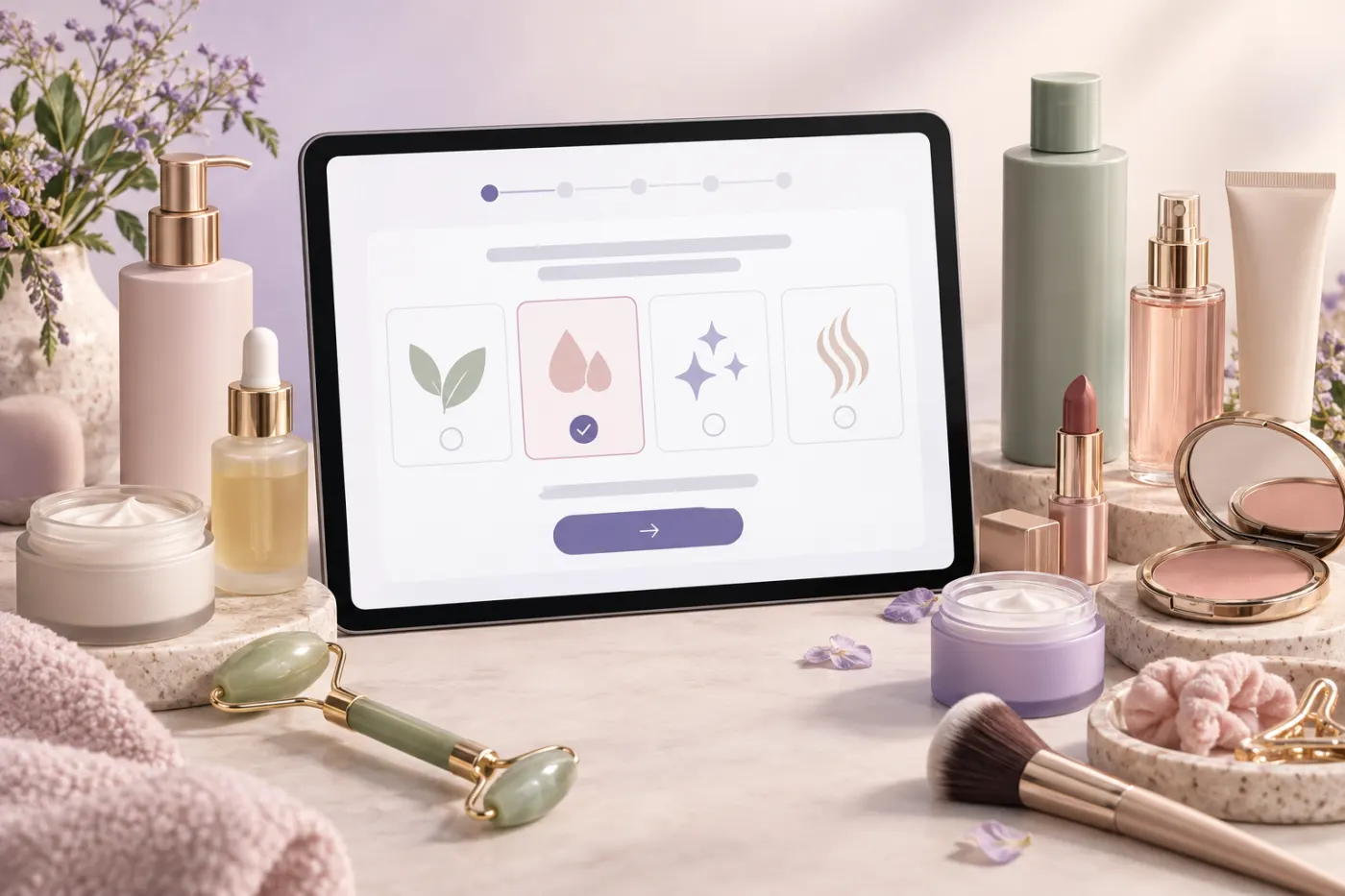
What makes a beauty product quiz useful?
Beauty catalogs often contain products that look similar but differ in finish, texture, routine step, shade family, scent profile, or intended cosmetic goal. A useful quiz turns those differences into simple shopper questions and reduces a large catalog to a manageable shortlist.
The strongest beauty quizzes do not imitate a medical consultation. They help customers describe preferences and shopping needs, then explain why each recommendation fits. Use the eight examples below as starting points and adapt the wording and logic to the products your store actually sells.
1. Skincare routine finder
A skincare routine finder is useful when customers need more than one item or do not understand product order. Ask about how their skin generally feels, their main cosmetic goal, texture preference, current routine length, sensitivity preferences, and desired number of steps.
The result can recommend a simple morning or evening routine in order: cleanser, treatment or serum, moisturizer, and daytime sun protection where appropriate. Explain the role of each product, avoid diagnosis language, and provide a shorter routine for shoppers who select a low-maintenance preference.
2. Foundation shade and finish finder
A foundation finder can narrow products by shade depth, undertone, coverage, finish, skin-feel preference, and preferred application. Use visual answer choices for shade depth and undertone, but make it clear that screens and lighting can affect color appearance.
Recommend the closest product family and a small shade range rather than claiming a guaranteed match from limited information. Include swatches on varied skin tones when available, explain the finish and coverage, and link to the store return or shade-exchange policy.
3. Hair-care routine quiz
Hair-care quizzes work well when the catalog is organized by texture, strand feel, styling habits, wash frequency, color treatment, and goals such as moisture, definition, volume, or frizz control. Ask only for details that change which products should appear.
A strong result groups products by routine step and frequency instead of presenting an unexplained list. It might recommend a cleanser, conditioner, weekly treatment, and styler while showing optional alternatives for shoppers who want fewer steps or a different format.
4. Fragrance profile finder
Fragrance shoppers may recognize moods and occasions more easily than note families. Ask where they plan to wear the scent, how noticeable they want it to be, which descriptions appeal to them, which notes they avoid, and whether they prefer fresh, floral, woody, gourmand, or aromatic directions.
Recommend two or three scents with a short explanation of the opening, character, and likely use occasion. Sample sizes or discovery sets make a useful primary result because fragrance develops differently on each person and is difficult to judge from a screen.
5. Makeup look builder
A makeup look quiz begins with the occasion or desired effect, then asks about time available, comfort level, color preferences, finish, and the steps the shopper already enjoys. Results can range from a fast everyday set to a more complete event look.
Organize the result in application order and distinguish essential products from optional additions. This format supports bundles without forcing every shopper into the largest set, and it gives beginners a clearer reason for each recommended item.
6. Beauty gift finder
A gift finder should ask about the recipient, occasion, budget, product category, scent tolerance, and whether the buyer wants a ready-made set or an individual item. Avoid questions the gift giver is unlikely to know, such as an exact foundation shade.
Use hard budget limits so the result never exceeds the selected range. Favor gift-ready products, versatile shades, discovery sets, and clearly labeled options. Include delivery timing and gift-wrap information only when the store can keep those details current.
7. Ingredient and values preference quiz
Some shoppers filter beauty products by fragrance preference, format, ingredients they avoid, vegan positioning, packaging choices, or other brand values. A quiz can make those catalog attributes easier to navigate when the product data is consistent and verifiable.
Treat declared exclusions as requirements, not soft preferences. Keep claims specific, use definitions that match the store product data, and update mappings whenever formulas or supplier information changes. Do not imply that a marketing preference is a medical safety guarantee.
8. Regimen replenishment and routine update quiz
Existing customers may not need a first-time finder. A routine update quiz can ask what they currently use, what they want to keep, whether their preferences have changed, which products are running low, and whether they want to simplify or expand the routine.
The result should preserve suitable favorites and recommend only meaningful changes. This creates a useful repeat-purchase experience and can help the store introduce complementary products without making the customer rebuild a routine from zero.
How to choose the right quiz for your beauty store
Review customer-service questions, site searches, product comparison behavior, and return reasons. Choose the decision that creates the most uncertainty and build one focused quiz around it. A specific promise such as Find your three-step skincare routine is clearer than a quiz that tries to cover every beauty category.
Map the products before writing the questions. Record the attributes that truly separate them, then create answer choices around those attributes. Requirements such as budget or a declared exclusion should filter products, while preferences such as finish or routine length can rank the remaining matches.
Beauty quiz questions that improve recommendations
Ask one idea per screen and use concrete answer labels. Useful formats include What result are you shopping for, Which texture do you prefer, How many steps fit your routine, What is your budget, and Are there any product types you want to avoid. Image choices can help with finishes, looks, and style directions when the images are accurate and accessible.
Make sensitive questions optional and explain why information is requested. If you collect an email address, separate delivery of the result from marketing consent and describe what the shopper will receive. Test every important path on mobile before publishing.
What to show on the beauty quiz result page
Keep the first result focused. Show a few strong matches, current images and prices, a short match explanation, and a clear product or add-to-cart action. For routines, display the products in use order. For shade or fragrance quizzes, acknowledge uncertainty and offer samples, swatches, or an easy comparison path.
Track quiz views, starts, completions, product clicks, add-to-cart activity, and purchases separately. Review no-match paths and common drop-off questions. Improving weak mappings and confusing answer choices usually matters more than adding more questions.
Questions Shopify merchants ask
What is the best type of product quiz for a beauty store?
Start with the decision customers find hardest. A skincare store might begin with a routine finder, a makeup store with a shade or finish finder, and a hair-care store with a hair-goal quiz. The best quiz connects a few meaningful answers to products that are actually available.
How many questions should a beauty product quiz include?
Most beauty quizzes can begin with five to seven focused questions. Keep questions that change the recommendation and remove questions that collect information without affecting the result.
Should a beauty quiz diagnose skin or hair conditions?
No. Keep the quiz focused on cosmetic preferences, routines, goals, and product attributes. Avoid medical diagnoses or treatment promises, and direct health concerns to an appropriate qualified professional.
Can one beauty store use more than one quiz?
Yes. Separate quizzes can serve different shopping decisions, such as skincare routines, foundation preferences, hair care, fragrance, and gifts. Give each quiz a clear purpose and avoid making shoppers repeat unnecessary questions.
What should a beauty quiz result include?
Show a small number of relevant products, explain how the answers influenced the match, display current product information, and provide a clear path to view products, add items to the cart, or retake the quiz.
Create a product recommendation quiz for your Shopify store
SmartSell Quiz helps you publish guided quizzes, recommend products, collect customer preferences, and improve the shopping experience without custom code.
Install SmartSell Quiz